The adoption of virtual reality (VR) technology in Romania is entering a new phase, with practical applications across various sectors showing potential for significant growth. As global interest in immersive digital experiences rises, Romania’s VR ecosystem is evolving from experimental projects to scalable solutions that could transform industries such as healthcare, education, real estate, and entertainment.
Healthcare: Enhancing Treatment and Training
Romanian medical institutions are increasingly utilizing virtual reality to improve patient care and professional training. Hospitals in Bucharest and Cluj-Napoca have integrated VR simulations for surgical preparations, pain management, and rehabilitation. These implementations allow medical professionals to practice complex procedures in a controlled virtual environment, reducing risks associated with live surgeries. Additionally, VR helps patients manage chronic pain and anxiety by providing immersive distraction techniques during therapy sessions. This convergence of technology and medicine demonstrates tangible benefits, positioning virtual reality as a valuable tool in Romania’s healthcare sector.
Education: Immersive Learning Experiences
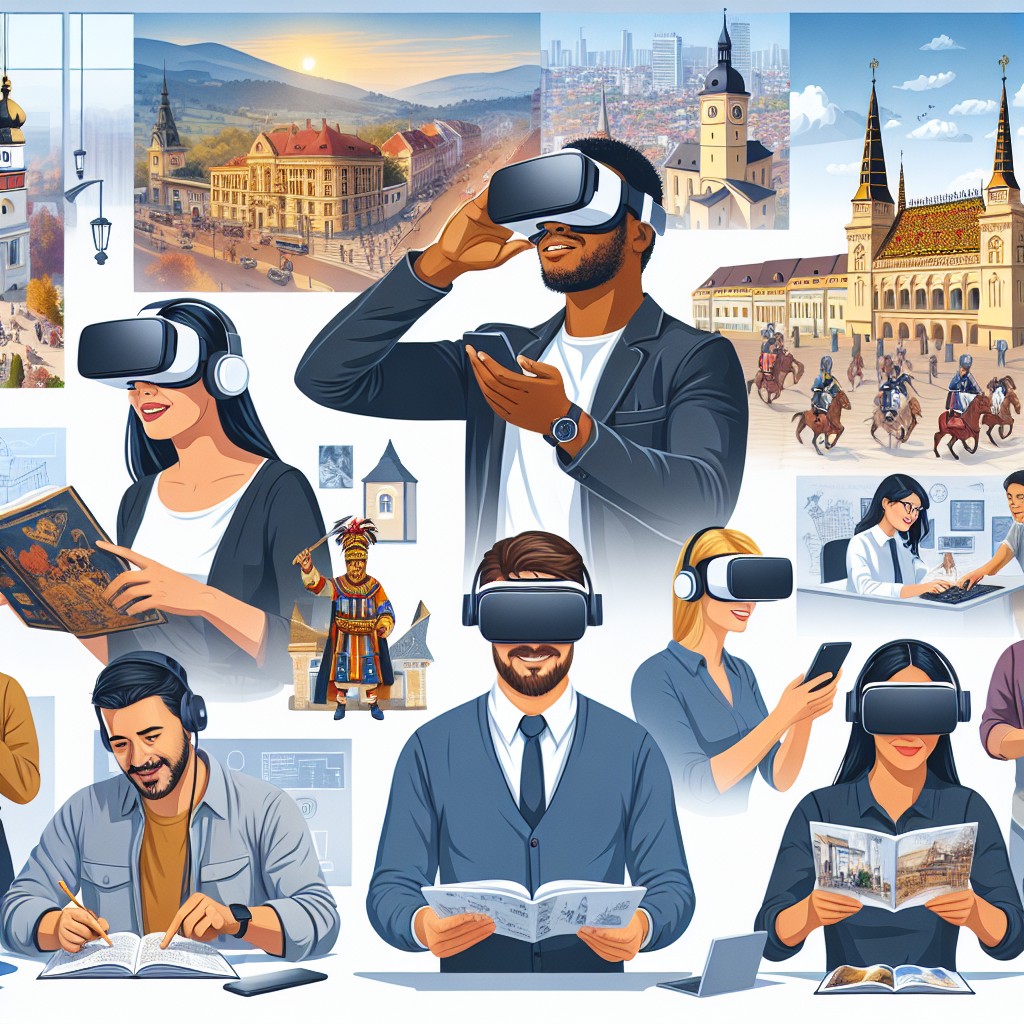
Educational organizations in Romania are adopting virtual reality to offer immersive learning experiences that transcend traditional classroom boundaries. Universities have begun incorporating VR modules into curricula, especially in disciplines like history, architecture, and engineering, where spatial understanding is crucial. VR enables students to virtually explore historical sites or complex engineering systems, enhancing comprehension and engagement. Moreover, VR supports inclusive education by providing customized learning environments for students with special needs. As educational institutions increasingly recognize these advantages, virtual reality applications in Romanian education are poised to expand significantly.
Real Estate: Revolutionizing Property Viewing
The Romanian real estate market has embraced virtual reality to revolutionize property transactions. Developers and agencies use VR to create detailed virtual tours of residential and commercial properties, allowing potential buyers or renters to experience spaces remotely. This technology reduces the need for physical visits, streamlines decision-making processes, and expands market reach, particularly for international clients. As internet infrastructure improves and VR hardware becomes more accessible, virtual reality applications in Romanian real estate are expected to become standard practice, facilitating more efficient and transparent property deals.
Entertainment and Culture: Expanding Audience Engagement
Romania’s cultural institutions and entertainment sectors are leveraging virtual reality to reach broader audiences and enrich visitor experiences. Museums have introduced VR exhibits that recreate historical events or artifacts, providing immersive storytelling methods. Likewise, the local film and gaming industries are exploring VR to offer interactive content that attracts younger demographics. While still in the early stages, these initiatives reflect a growing awareness of virtual reality’s potential to enhance cultural appreciation and entertainment value. Continued investment and collaboration may further accelerate VR adoption in Romania’s creative fields.
Challenges and Infrastructure Development
Despite encouraging developments, several challenges remain for scaling virtual reality in Romania. Limited access to high-performance VR hardware among the general population and inconsistent internet coverage in rural areas present barriers. Moreover, the need for specialized content creation and technical expertise requires sustained investments and training programs. However, government initiatives supporting digital innovation and partnerships between educational institutions and the private sector are helping to address these issues. As infrastructure improves and costs decrease, the practical adoption of virtual reality applications across multiple domains is likely to gain momentum.
In conclusion, virtual reality in Romania is transitioning from niche experimentation to broader practical applications. Sectors such as healthcare, education, real estate, and culture are at the forefront of this shift, demonstrating measurable benefits. While challenges persist, ongoing infrastructure enhancements and stakeholder collaboration suggest that virtual reality technology has the potential to become an integral component of Romania’s digital future. Continued monitoring of these developments will be essential to understanding the long-term impact and scalability of VR solutions in the country.
Frequently Asked Questions about virtual reality
What are the main uses of virtual reality in Romania today?
The main uses of virtual reality in Romania today include medical training and treatment, immersive educational programs, virtual property tours in real estate, and enriching cultural and entertainment experiences.
How is virtual reality improving healthcare services in Romania?
Virtual reality improves healthcare services in Romania by enabling realistic surgical simulations, aiding in patient pain management, and supporting rehabilitation therapies that employ immersive environments to optimize treatment outcomes.
Can virtual reality technology be accessed widely by Romanian consumers?
Access to virtual reality technology in Romania is currently limited primarily by hardware costs and internet connectivity, but these barriers are gradually diminishing as technology becomes more affordable and infrastructure improves.
What role does virtual reality play in Romanian education?
In Romanian education, virtual reality offers interactive and immersive learning experiences, helping students better understand complex subjects by simulating real-world environments and scenarios.
What are the biggest challenges for virtual reality adoption in Romania?
The biggest challenges for virtual reality adoption in Romania include limited hardware availability, varying internet quality, the need for locally relevant content, and the requirement for specialized skills to develop and maintain VR applications.